
A series is a promise to the reader: the friend you met in the first book will be there in the next one. If the face, the colours or the size change from book to book, that promise breaks. These are the seven habits I use in every series.
1. Start with a turnaround
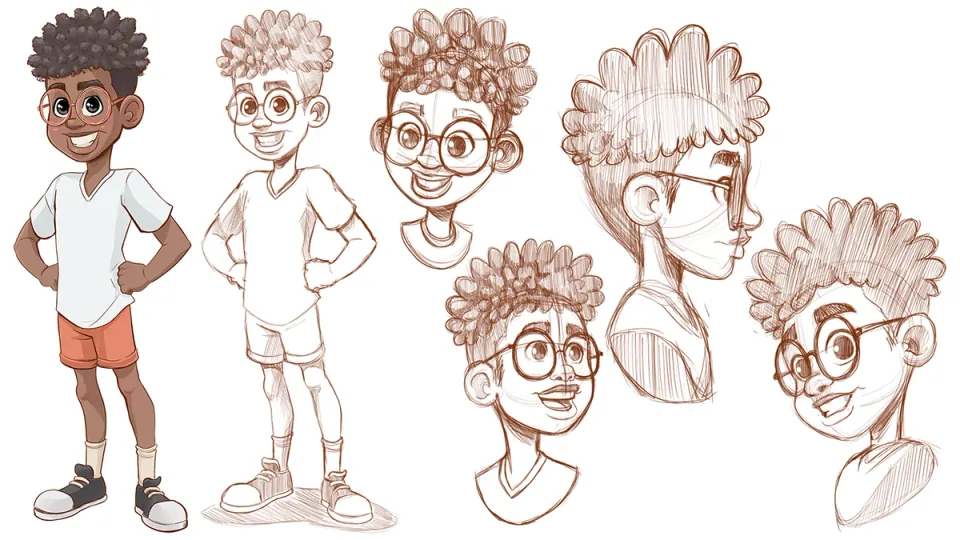
Before any page, I draw the character from the front, the side, the back and in three-quarter view. It answers questions you would otherwise answer differently every time: how long is the hair at the back? Which shoulder is the backpack on?
2. Draw the expressions once, properly
Happy, sad, angry, scared, surprised, thinking. An expression sheet keeps the face readable in every mood, and it shows which features must never change: the shape of the eyes, the eyebrows, the smile.
3. Write the colours down
A colour card with the exact values for skin, hair, eyes and clothes. Screens and printers shift colours, so the card is the reference, not your memory.
4. Fix the proportions
How many heads tall is the character? How big are the eyes compared to the face? Once those numbers are fixed, the character keeps the same size next to everyone else, page after page.
5. Change clothes on purpose, not by accident
Characters can change clothes, but some details should stay: a favourite colour, glasses, a hat, a hairstyle. That one detail makes them recognisable from far away, even in a tiny picture.
6. Plan for growing up
If the series follows its readers, the character grows too. Bene exists at three ages: as a toddler, as a boy and as a teenager. The face changes, but the key features stay.

7. Check every page against the model sheet
Before a page is finished, I put it next to the model sheet. The nose? The hands? The colours? It takes a minute, and it saves the series.
Got a book that needs pictures?
Tell me about your story: what it is about, who it is for and when you'd like it ready. I'll get back to you with ideas and a quote.